
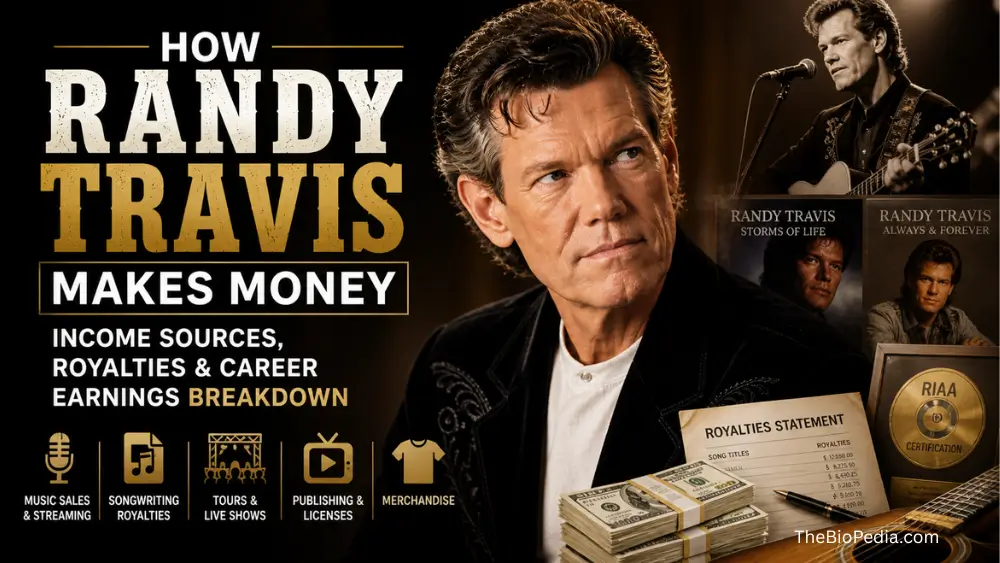
Randy Travis is one of country music’s most respected legends, known not only for his timeless songs but also for building a long-lasting financial legacy. While his peak years were in the 1980s and 1990s, his income continues to flow decades later thanks to smart career choices and the enduring appeal of his music.
So, how does Randy Travis make money today? His earnings come from a mix of music sales, royalties, streaming revenue, acting roles, and licensing deals. Even after his 2013 stroke limited his ability to perform, his catalog continues to generate consistent passive income.
In this article, we break down all of Randy Travis’ income sources, how they evolved over time, and what keeps his earnings steady in 2026.
Contents
Overview of Randy Travis’ Earnings Model
Randy Travis’ income can be divided into two main categories:
- Active income – earned through touring, performing, and acting
- Passive income – generated through royalties, streaming, and licensing
During his peak career years, active income—especially from touring and album sales—made up the majority of his earnings. However, after his health challenges, his income model shifted heavily toward passive revenue streams.
This transition highlights the strength of his music catalog, which continues to earn money long after its original release.
Music Sales & Album Revenue
The foundation of Randy Travis’ wealth lies in his album sales. During the 1980s and 1990s, he was one of the best-selling country artists in the world.
He has sold over 25 million albums globally, with several achieving gold and multi-platinum status. His debut album, Storms of Life, was a massive commercial success and helped establish him as a leading figure in country music.
Revenue from album sales came from:
- Physical records (vinyl, cassette, CDs)
- Distribution deals with record labels
- International sales
At the height of his career, album sales generated millions of dollars, forming the core of his financial success. Even today, re-releases and digital downloads continue to contribute to his earnings.
Streaming Income & Digital Earnings
With the rise of digital platforms, Randy Travis’ music has found new life through streaming services such as Spotify, Apple Music, and YouTube.
Although streaming pays less per play compared to physical album sales, the volume of streams can add up over time. His classic songs continue to attract listeners, especially among country music fans and nostalgic audiences.
Streaming income includes:
- Per-stream payouts
- Playlist placements
- YouTube ad revenue
As more listeners discover his music online, this income stream continues to grow, making it an important part of his modern earnings.
Royalties & Publishing Income
Royalties are now the largest and most consistent source of income for Randy Travis.
Types of Royalties
1. Mechanical Royalties
Earned from album sales and digital downloads.
2. Performance Royalties
Generated when his songs are played on:
- Radio stations
- Television
- Public venues
3. Sync Licensing
Earned when his music is used in:
- Movies
- TV shows
- Commercials
Because Randy Travis recorded numerous hit songs, these royalties continue to generate income long after their initial release. His music’s timeless appeal ensures steady airplay and licensing opportunities.
Concert Tours & Live Performances
Touring was once one of Randy Travis’ biggest income sources.
During his peak:
- He performed in sold-out venues across the United States
- Ticket sales generated substantial revenue
- Live performances boosted album sales
Concert tours often brought in millions of dollars annually, especially during the late 1980s and early 1990s.
However, after his 2013 stroke, Travis was no longer able to tour regularly. This significantly reduced his active income but did not eliminate his earnings due to his strong royalty base.
Acting Career & Media Appearances
Randy Travis also earned money through acting and television appearances.
He appeared in:
- TV movies
- Film productions
- Guest roles on popular shows
While acting was not his primary career focus, it provided an additional revenue stream and expanded his audience.
Media appearances, interviews, and special features have also contributed to his overall earnings over the years.
Merchandise, Branding & Endorsements
Like many artists, Randy Travis has benefited from merchandise sales and branding opportunities.
These include:
- Branded merchandise (shirts, albums, memorabilia)
- Limited endorsement deals
- Fan-focused products
Although not as large as his music income, merchandise adds another layer to his revenue, especially among dedicated fans.
Passive Income After 2013 Stroke
The 2013 stroke marked a turning point in Randy Travis’ career and income structure.
With limited ability to perform, he shifted almost entirely to passive income sources. Fortunately, his earlier success ensured that he could continue earning without active work.
Key passive income streams include:
- Music royalties
- Streaming revenue
- Licensing deals
This transition demonstrates the importance of building a strong catalog that can generate income over time. For Randy Travis, his past work continues to support him financially.
Estimated Annual Earnings (Then vs Now)
Peak Years (1980s–1990s)
- Annual earnings likely reached millions of dollars
- Major contributors: album sales and touring
Present Day (Post-2013)
- Earnings are lower but steady
- Estimated annual income: hundreds of thousands of dollars
- Primary sources: royalties and streaming
While his income has decreased compared to his peak, it remains consistent due to the enduring popularity of his music.
Financial Strategy & Wealth Management
Randy Travis’ financial stability can also be attributed to his approach to money management.
Key Factors:
- Relatively modest lifestyle compared to some celebrities
- Investment in real estate assets
- Long-term focus on royalties and publishing rights
By maintaining a balanced financial strategy, he has been able to preserve his wealth even after his active career slowed.
Conclusion
Randy Travis makes money through a diverse mix of income streams, including music sales, royalties, streaming revenue, acting, and licensing deals. While his early career was driven by album sales and touring, his current earnings rely heavily on passive income generated by his extensive music catalog.
His ability to continue earning despite health challenges highlights the value of long-term planning and artistic legacy in the music industry.
Ultimately, Randy Travis’ income story is not just about numbers—it’s a testament to the lasting power of great music and a career built on authenticity and talent.
More About Randy Travis
If you want to explore more about his life, career, and finances, check out these detailed guides:
- Randy Travis Net Worth (2026) – A complete breakdown of his wealth, assets, and financial journey
- Randy Travis Biography – Learn about his early life, career rise, and inspiring comeback